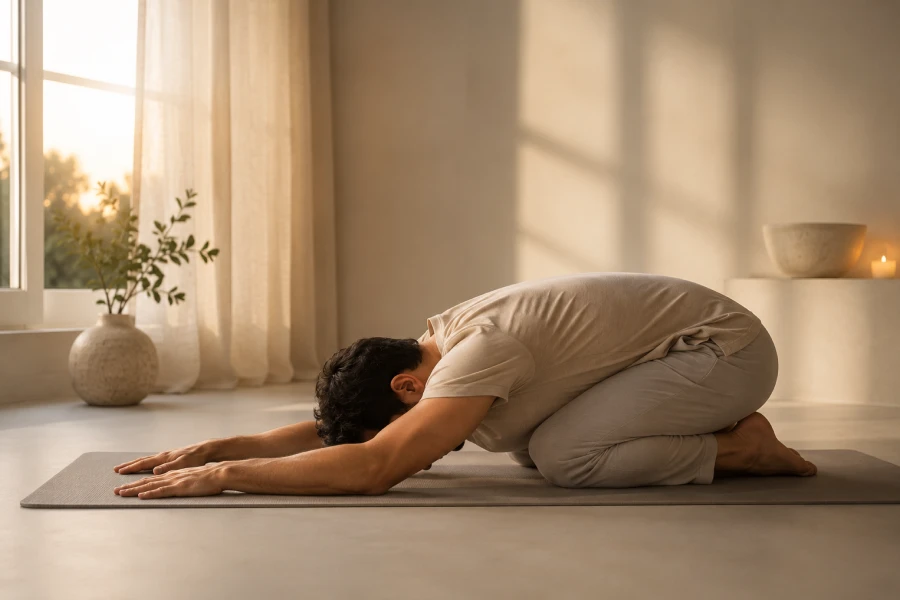
Stillness can feel soothing for some people and uncomfortable for others. When the mind is racing, sitting quietly may make every thought feel louder. Mindful movement for anxiety offers another way to practice awareness. Instead of forcing the body to become motionless, you use gentle movement as the point of focus. Walking, stretching, swaying, and simple yoga poses can create rhythm without demanding perfect calm. The goal is not to eliminate anxious sensations immediately. It is to relate to them with more space, curiosity, and physical support.
Movement gives restless energy a direction. It also provides sensory information through muscles, joints, breath, and contact with the floor. These signals can help attention move away from repetitive thought loops. Begin with something familiar. Walk slowly across a room. Roll the shoulders. Shift weight between the feet. Notice pressure and balance. The movement does not need to look graceful. It only needs to be safe enough for you to observe.
Awareness changes the experience. Rather than moving automatically, notice how each action begins and ends. Feel the heel touch down. Observe the arms swinging. Listen to the breath. This approach resembles a beginner mindfulness practice with motion as the anchor. When thoughts return, gently redirect attention to sensation. Repetition is expected. Each return strengthens the skill.
Predictability can make movement feel safer. Choose a simple pattern that repeats. Step side to side. Lift and lower the arms. Rock gently from heel to toe. March slowly while counting. Repetition creates rhythm, and rhythm can reduce the feeling of internal chaos. Keep the pace comfortable. Faster movement may help some people, while others need slowness. Let the body guide the speed.
Use a clear time boundary. Two minutes can be enough at first. Knowing when the practice will end may reduce resistance. Afterward, pause and notice whether anything changed. The anxiety may remain, but perhaps the shoulders feel lower or the breath feels less trapped. Small shifts count. The practice is not successful only when discomfort disappears.
Grounding directs attention toward immediate physical experience. Press the feet into the floor. Notice the support beneath you. Move the toes. Bend and straighten the knees. Place a hand against a wall and feel its stability. These actions create concrete sensations that are easier to observe than abstract thoughts. They also remind the body of its present environment.
A slow relaxing movement sequence can combine grounding with breath. Inhale while lifting the arms. Exhale while lowering them. Fold halfway, then return to standing. Keep the range small. The purpose is not flexibility. It is continuity. A steady sequence gives attention somewhere practical to return when anxious thinking pulls it away.
Anxiety may make deep breathing feel difficult. Do not force large inhalations. Begin by noticing the breath exactly as it is. Then soften the exhale. A quiet sigh may help. Humming can lengthen the exhale naturally. Movement can also support breathing. Open the arms while inhaling. Bring them inward while exhaling. Let the body create space without demanding a specific result.
If breath focus increases discomfort, use another anchor. Notice the feet, sounds, or temperature instead. Mindfulness should remain adaptable. There is no rule that says breathing must be the central technique. The best anchor is the one that helps you remain present without increasing distress. Choice creates a sense of agency, which can be especially valuable during anxious moments.
Not every anxious moment happens at home. Small, discreet movements can help in public settings. Press the feet into the ground. Roll the shoulders once. Relax the hands. Shift weight slowly. Walk to get water. Stretch the fingers under a table. These actions provide sensory input without drawing attention. They can create a brief pause during meetings, travel, appointments, or crowded events.
Pair movement with orientation. Look around and identify neutral details. Notice a window, color, texture, or object. This helps attention connect with the present environment. A personal yoga habit planner can help you record which techniques work best in different situations. Preparation reduces uncertainty. You know which movements are available before stress rises.
Movement can be helpful, but it is not a replacement for professional care when anxiety feels persistent, severe, or disruptive. Consider speaking with a qualified mental health professional if symptoms interfere with sleep, work, relationships, or daily functioning. Support can include therapy, medical evaluation, lifestyle changes, and other evidence-based options. Asking for help is a practical response, not a failure.
Use mindful movement as one tool within a broader support system. Sleep, nourishment, social connection, and medication when prescribed may all matter. Different tools serve different moments. Movement may help you settle enough to take the next step. It does not need to carry the entire responsibility. A flexible care plan creates more options and reduces pressure on any single practice.
Practice during calm moments as well as difficult ones. Familiarity makes the movements easier to access when anxiety rises. Choose a two-minute sequence and repeat it daily. Keep the same order at first. Over time, the body begins to recognize the pattern. That recognition can create a small sense of predictability during uncertain moments.
Progress may look subtle. You may notice anxiety sooner. You may respond with less judgment. Recovery may happen more quickly. These changes matter. The goal is not to become someone who never feels anxious. It is to build a more supportive relationship with your body when anxiety appears. Movement becomes a bridge between restless energy and present-moment awareness.


Leave a comment