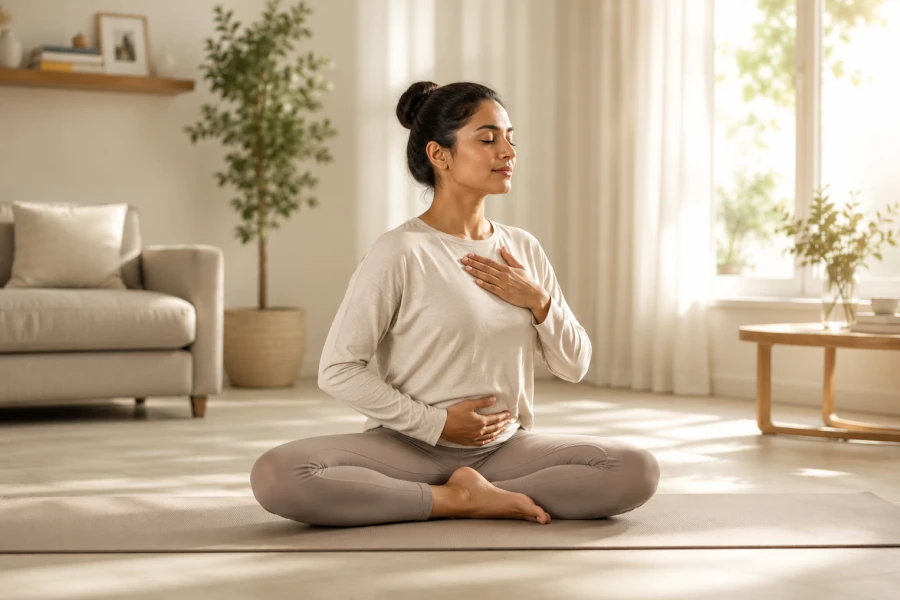
Stress does not always disappear when the day becomes quiet. It can remain in tight shoulders, shallow breathing, restless thoughts, and a body that still feels on alert. Yoga for stress relief offers a practical way to meet that tension without demanding that you ignore reality. The goal is not to create a perfect state of calm. It is to give the nervous system a different experience for a few minutes. Gentle movement, steady breathing, and deliberate pauses can help you feel more grounded inside an ordinary day.
Breathing changes naturally when stress rises. It may become faster, shallower, or concentrated in the upper chest. Deliberately slowing the exhale can encourage a more settled rhythm. Begin in a comfortable seated or lying position. Place one hand on the ribs. Inhale gently through the nose. Exhale a little longer than you inhaled. Avoid forcing depth. Comfortable breathing works better than dramatic breathing. The purpose is to reduce effort, not create another performance task.
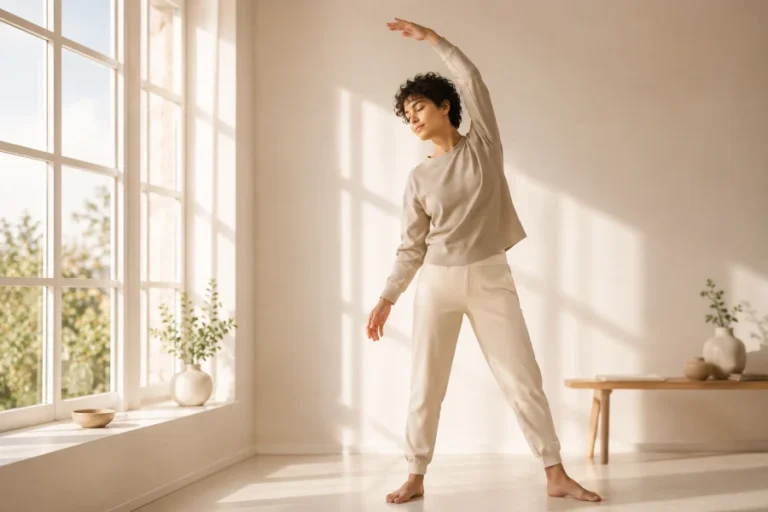
Pair breath with simple movement. Lift the arms while inhaling. Lower them while exhaling. Round the back gently, then return to neutral. These patterns connect attention to the body. A stress-relieving yoga practice becomes more approachable when breath and movement remain small. You do not need exceptional flexibility. You need enough comfort to notice what changes.
Different days require different forms of support. After long hours at a desk, your body may need gentle opening through the chest and hips. After an overstimulating day, slower floor-based poses may feel better. In the morning, a short standing sequence can help you transition into activity. Choose the practice according to your current state rather than following a rigid plan. This responsiveness makes yoga feel useful instead of ceremonial.
Time matters less than consistency. Five focused minutes can interrupt a stress cycle. Ten minutes may create enough space to reset before dinner or sleep. Longer sessions can be valuable, but they are not required. Keep a small practice area ready when possible. A mat, towel, or clear section of floor can act as a visual invitation. Reducing setup makes it easier to begin when your mind feels crowded.
Grounding poses emphasize contact with the floor. Child’s pose, supported forward folds, reclined twists, and legs resting on a chair can create a sense of stability. Use cushions or blankets to reduce strain. Support allows muscles to release gradually. It also communicates that comfort is part of the practice. A pose does not become more valuable because it looks difficult. The most useful position is the one that lets you breathe steadily.
Notice points of contact. Feel the feet, hands, back, or hips against a stable surface. Let your attention rest on pressure, warmth, and texture. This sensory focus supports a gentle yoga practice by bringing awareness away from looping thoughts. The mind may wander again. That is normal. Return to sensation without criticism. Each return is part of the practice.
Yoga culture can sometimes make calm look polished. Real practice often feels messier. Your balance may change. Thoughts may remain active. A pose may feel different from one side to the other. None of this means the session failed. Stress relief does not require visual perfection. It requires permission to notice your experience honestly. Let the practice be private, practical, and responsive to the body you have today.
Reduce intensity when breathing becomes strained. Use the wall for support. Bend the knees. Shorten the range of motion. Rest sooner. These adjustments preserve the purpose of the session. If the practice becomes another place to prove yourself, tension may increase. A calmer approach invites curiosity instead. You can challenge the body on other days. During a stressful moment, support may be the more skillful choice.
Evening practice should help the body transition rather than create stimulation. Choose slower poses and lower lighting. Avoid forcing deep stretches. Gentle spinal movements, supported folds, and comfortable hip openings can work well. Keep the breath quiet. End in a resting position for several minutes. This sequence creates a boundary between daytime demands and sleep preparation. It does not guarantee instant sleep, but it can make the transition feel less abrupt.
Combine the practice with a simple environmental cue. Silence notifications. Place the phone out of reach. Dim the room. Repeat the same few movements nightly. A familiar mindful breathing routine can signal that the active part of the day is ending. Repetition helps the body recognize the pattern, even when the mind still feels busy.
Choose a practice length that feels almost too easy. Three minutes can become five. Five can become ten. Starting small protects consistency and reduces resistance. Attach the session to a daily event, such as closing the laptop or preparing for bed. Keep expectations modest. The purpose is to create a reliable doorway into calm, not to achieve a perfect streak.
Track how you feel before and after, using simple words such as tense, restless, steady, or tired. Over time, patterns may appear. Certain poses may help after desk work. Breathing may be enough on emotionally intense days. Use those observations to personalize the practice. Stress will still exist. The difference is that you will have a repeatable way to meet it with movement, breath, and a little more space.



Leave a comment