Every day has a difficult hour. It may arrive after work, before sleep, during family transitions, or in the quiet moment when accumulated tension finally becomes noticeable. A calming yoga routine can soften that hour without requiring a dramatic change of environment. Gentle movement gives the body somewhere to place restless energy. Slow breathing adds rhythm. Supported poses reduce effort. The practice does not erase responsibilities, but it can change how you carry them. Ten intentional minutes may create enough space to respond instead of simply react.
Transitions are powerful because they already contain a natural pause. Use the moment after closing your laptop, returning home, or finishing dinner. Change the lighting. Put the phone away. Step onto a mat or clear a small area. These cues tell the body that one part of the day is ending. A routine becomes easier to repeat when it belongs to a specific transition rather than floating somewhere inside an already crowded schedule.
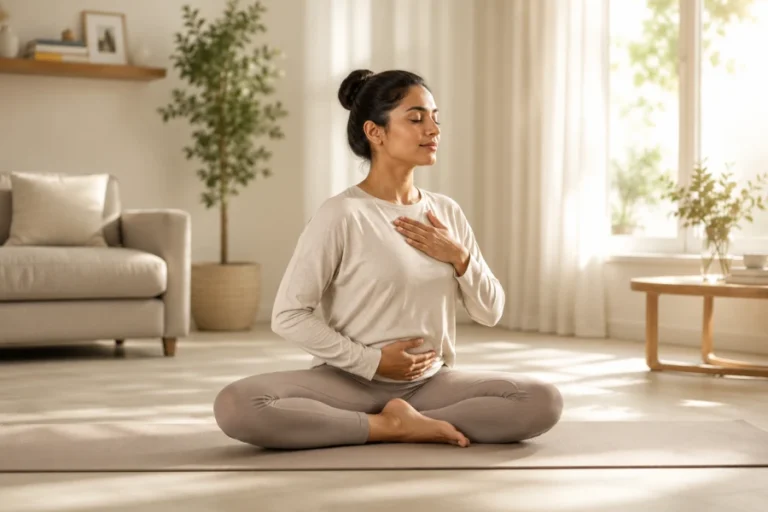
Begin with one minute of stillness. Sit, stand, or lie down comfortably. Notice your breathing without trying to control it. Then make the exhale slightly longer. This simple entry supports a daily yoga for calm habit because it requires no flexibility and little preparation. The first minute matters. It separates the practice from the speed of everything that came before.
A calming sequence should not feel like a test. Select positions that allow steady breathing and comfortable support. Cat-cow movements can release the spine. A supported child’s pose can quiet the upper body. Reclined twists invite gentle rotation. Legs on a chair may help the lower back settle. Each pose should feel adjustable. Use cushions, blankets, or the wall whenever they improve comfort.
Move slowly enough to notice the beginning and end of each motion. Avoid bouncing or forcing range. Let the breath guide the pace. If a position creates pinching, numbness, or sharp pain, leave it. Rest is always available. This responsiveness helps the practice feel safe. Calm develops more easily when the body is not defending itself against unnecessary strain.
Complicated breathing techniques are not required. Start by breathing through the nose when comfortable. Allow the ribs to expand gently. Exhale without pushing. Count silently if rhythm helps. An inhale of four and an exhale of six may feel soothing, but the exact numbers do not matter. Choose a pace that remains easy. Forced breathing can create more tension. Comfortable breathing is the priority.
Match movement with breath during simple poses. Inhale while lengthening the spine. Exhale while folding or softening. This pairing creates continuity and supports restorative yoga poses without making the session feel technical. When thoughts interrupt, return to the exhale. You are not trying to empty the mind. You are giving attention a steady place to land.
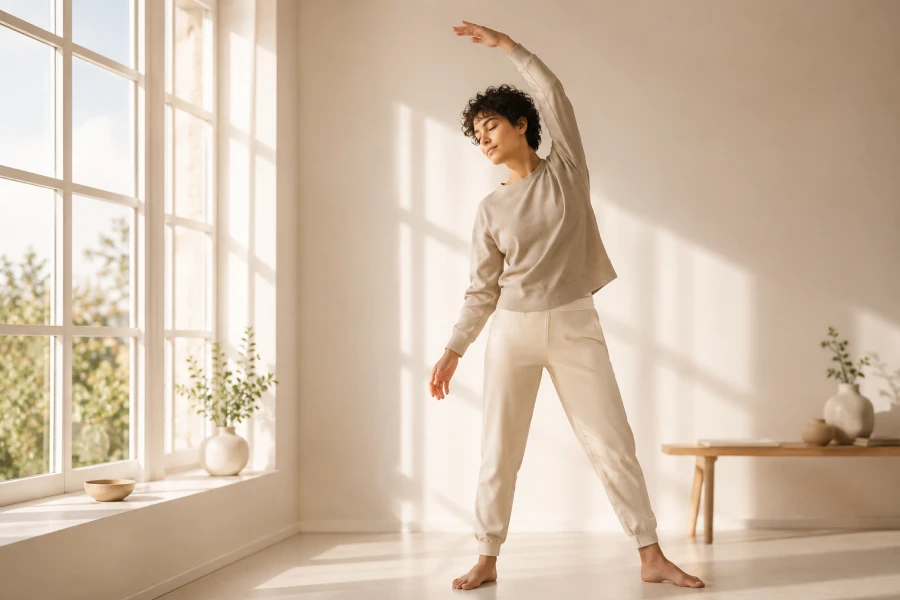
Some evenings call for movement. Others call for stillness. If your body feels restless, begin with standing side stretches, slow folds, and gentle lunges. If exhaustion dominates, start on the floor. The routine should reflect your actual state. A fixed sequence can be helpful, but flexibility keeps it compassionate. You are not required to perform the same practice every day for it to count.
Create two versions. A five-minute sequence can serve busy or depleted evenings. A fifteen-minute version can offer more space when available. Both should share the same opening and closing cues. This familiarity supports habit formation. It also prevents the shorter practice from feeling incomplete. The minimum version is not a compromise. It is part of the design.
Emotions often appear physically before they become clear mentally. The jaw tightens. The shoulders rise. Breathing becomes shallow. Yoga can help you notice those signals sooner. As you move, ask where effort feels unnecessary. Relax the hands. Soften the face. Unclench the tongue. These small releases may not change the situation, but they can reduce the amount of tension surrounding it.
A consistent yoga for emotional balance practice also creates a pause before difficult conversations or decisions. That pause can be meaningful. It offers time to recognize what you feel and what you need. Movement becomes a way to gather information rather than escape emotion. You may still feel upset, but you can meet the feeling with greater steadiness.
End the session in a position that feels supported. Lie on your back with knees bent, rest on one side, or sit against a wall. Stay for several breaths. Notice temperature, heartbeat, and contact with the floor. Let the body become heavy. This final pause helps integrate the transition. It also gives the nervous system time to register that effort has ended.
Choose one closing action. Fold the blanket. Turn off the light. Drink water. Write one sentence about how you feel. Repeating the same ending gives the practice a clear boundary. It prevents the session from dissolving immediately into the next task. A calm routine becomes more memorable when it has a beginning, middle, and end.
Consistency grows when the routine stays simple. Keep the same five or six poses for several weeks. Familiarity reduces decision fatigue. It also allows you to notice subtle changes in breath, comfort, and mobility. Novelty can return later. First, create trust. The body often responds more deeply when it knows what is coming.
Missed days are part of any routine. Return without extending the session as punishment. Begin with the shortest version. Let one successful evening rebuild momentum. The hardest hour may not disappear, but it can become less overwhelming. A dependable practice gives you something steady to reach for, even when the day has offered very little space.



Leave a comment