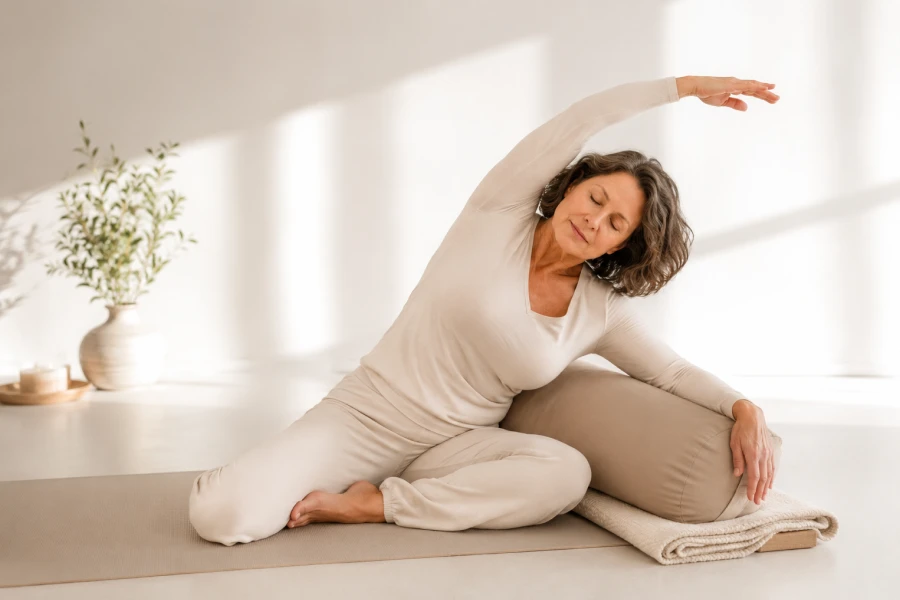
Relaxation becomes difficult when it turns into another achievement. Beginner yoga for relaxation should feel different. It offers a simple way to slow down, move gently, and notice the body without comparing yourself with anyone. You do not need impressive flexibility. You do not need expensive clothing or a perfect room. A few supported poses and calm breaths can create a meaningful pause. The practice works best when comfort leads. Progress may look like softer shoulders, steadier breathing, or a greater willingness to rest. Those changes are enough.
Choose a quiet area where you can move safely. A mat is helpful but not required. A carpet, folded blanket, or firm rug may work. Gather a cushion and chair for support. Wear clothing that allows easy movement. Remove anything that creates pressure or distraction. These details reduce friction. They also reinforce the idea that the session is designed around your comfort, not around appearance.
Start in a position that feels stable. Sit against a wall, lie with knees bent, or stand with feet apart. Notice where the body feels supported. Allow the hands to rest. A nervous system reset begins more easily when the body does not have to fight for balance. Support is part of the practice, not an obstacle to it.
Familiar poses reduce mental effort. Begin with shoulder rolls, seated side bends, cat-cow movements, supported child’s pose, and a reclined twist. Finish with legs resting on a chair. Each position should allow comfortable breathing. Move within a range that feels natural. Avoid forcing the joints. The purpose is to create ease through repetition, not to chase maximum depth.
Stay in each pose for several slow breaths. Leave sooner when discomfort appears. Use cushions under the knees or head. Keep the neck neutral. Gentle modifications make the session more useful because they allow the body to settle. A relaxing practice should not require endurance. It should give you repeated opportunities to release unnecessary effort.
Flow does not need to be fast or complicated. Link two or three movements together. Inhale while lifting the arms. Exhale while folding slightly. Inhale back to standing. Repeat at a comfortable pace. On the floor, move between cat and cow with the breath. These small sequences create continuity. They also help the mind remain connected to the body.
A slow flow yoga approach can release restlessness before still poses. Movement gives excess energy somewhere to go. After several rounds, pause and notice the effect. The breath may feel smoother. The body may feel warmer. These shifts prepare you for deeper rest without demanding that you become still immediately.
Relaxation breathing should not feel like a contest. Avoid forcing deep inhalations. Instead, make the exhale quiet and slightly longer. Breathe through the nose when comfortable. If counting helps, try inhaling for four and exhaling for five or six. Stop counting if it creates tension. Natural rhythm matters more than exact timing.
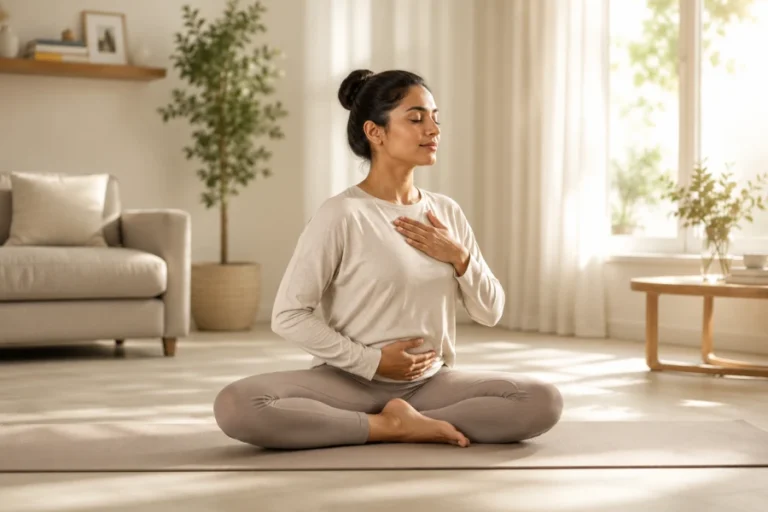
Place one hand on the ribs and one on the abdomen. Notice movement without judging it. Some breaths will feel shallow. Others will expand more fully. Both are acceptable. The practice is to observe and soften, not control every detail. Over time, awareness may make it easier to recognize when stress changes your breathing during the day.
Evening is a natural time for a gentle session because the body needs help transitioning out of activity. Dim the lights. Reduce screen exposure. Choose floor-based poses. Keep the practice short enough that it does not delay sleep. Five to fifteen minutes can be sufficient. End in a supported position and remain there for several breaths.
Repeat the same sequence most evenings. Familiarity can become calming because the body knows what comes next. A dependable mindful living routine also creates a clear boundary between daytime responsibilities and nighttime rest. The sequence does not need to be perfect. Its value comes from returning to it consistently.
Online images can make yoga appear effortless and visually perfect. Real practice is more varied. Balance changes. Flexibility differs from side to side. Some days feel comfortable, while others feel stiff. These differences are normal. Avoid measuring success by how a pose looks. Ask whether the practice helped you breathe, notice, or soften. Those outcomes matter more.
Comparison often pulls attention away from direct experience. Bring it back to sensation. Notice pressure, temperature, and breath. Use support before discomfort becomes intense. Rest whenever needed. The body does not owe you a performance. A relaxation practice becomes more effective when it offers permission rather than pressure.
Choose a minimum practice you can complete even on busy days. Two poses and one minute of breathing may be enough. This minimum protects the habit. Longer sessions can remain optional. When energy is available, add movement. When it is not, stay with the simplest version. Flexibility makes the routine easier to continue.
Notice the effects that appear outside the session. You may release shoulder tension sooner. You may pause before reacting. Bedtime may feel less abrupt. These small changes show that the practice is becoming part of daily life. Relaxation is not a perfect state you must achieve. It is a skill you can revisit, one supported breath and one gentle movement at a time.


Leave a comment